
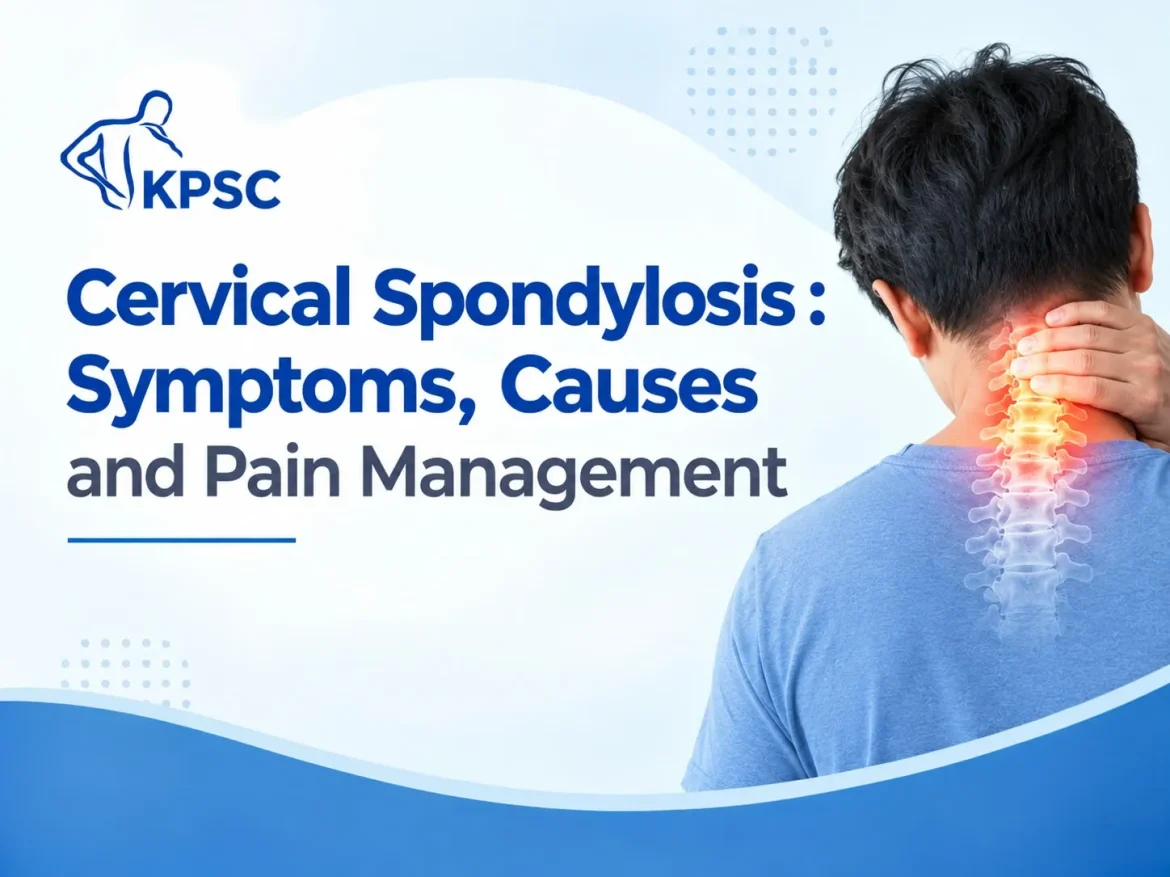
Prolonged hours at office workstations, extensive smartphone use, and daily transit through Kolkata’s dense traffic take a heavy toll on neck posture. Many working professionals and senior citizens dismiss early neck stiffness as ordinary muscle fatigue, relying on pain balms or temporary painkillers. When degenerative disc thinning and joint wear settle in, simple stiffness rapidly evolves into chronic arm pain, numbness, and severe headaches. Seeking specialized cervical spondylosis treatment in Kolkata ensures an accurate anatomical diagnosis, protecting cervical nerve roots and restoring pain-free neck mobility without requiring open surgical intervention.
Cervical Spondylosis Treatment in Kolkata and Neck Biomechanics
The cervical spine consists of seven small vertebrae, labeled C1 through C7, separated by shock-absorbing intervertebral discs. These vertebrae support the full weight of the head while allowing fluid nodding, tilting, and rotating motions. Paired cervical facet joints behind each vertebra stabilize the spinal column and prevent excessive shearing stress.
With age and sustained postural strain, intervertebral discs dehydrate and lose height. This dehydration shifts compressive loads directly onto the facet joints, leading to cartilage wear and localized inflammation. The body attempts to stabilize this mechanical instability by forming osteophytes, commonly known as bone spurs, along vertebral margins.
When these bone spurs narrow the spinal canal or exit foramina, adjacent nerve roots become mechanically compressed. Choosing timely cervical spondylosis treatment in Kolkata helps halt this degenerative cycle before permanent neurological deficits occur. At Kolkata Pain Relief, clinical assessments focus on pinpointing the exact spinal segment responsible for nerve irritation before designing an individualized non-surgical treatment plan.
Clinical Patterns of Cervical Spondylosis Symptoms
Recognizing the early physical indicators of cervical spondylosis symptoms helps patients seek treatment before nerve inflammation worsens. Discomfort often starts as a deep, aching sensation at the base of the neck that spreads toward the shoulders.
Morning neck stiffness is common. Patients frequently find it painful to turn their head while driving, check blind spots, or look up at ceiling fans. Over time, recurring tension headaches originate at the base of the skull and travel forward over the crown of the head.
When bone spurs or herniated disc fragments compress cervical nerve roots, the condition progresses into cervical radiculopathy. Patients experience sharp, shooting pain traveling down the shoulder, arm, forearm, and into specific fingers. Paresthesia, described as pins-and-needles or numbness, often accompanies this radiating pain, diminishing grip strength and making it difficult to button shirts or hold pens.
Mechanical and Biological Causes of Degenerative Neck Wear
Cervical spinal degeneration results from prolonged postural imbalances, biological aging, and repetitive everyday strain:
- Age-Related Disc Desiccation: Natural loss of water content causes cervical discs to flatten, narrowing the space between adjacent vertebrae.
- Forward Head Posture Strain: Tilting the head forward over laptops and mobile screens multiplies the mechanical load on lower cervical joints significantly.
- Facet Joint Cartilage Degeneration: Friction between exposed spinal joint surfaces causes chronic inflammation, joint hypertrophy, and localized muscle guarding.
- Ligamentous Calcification: The posterior longitudinal ligament and ligamentum flavum thicken and lose flexibility, reducing the natural diameter of the spinal canal.
- Traumatic Whiplash Episodes: Previous vehicular accidents or sudden athletic impacts can injure cervical ligaments, accelerating premature spinal degeneration.
Diagnostic Evaluation by a Cervical Pain Specialist
An accurate medical diagnosis differentiates cervical wear from rotator cuff tears, thoracic outlet syndrome, and peripheral nerve entrapments like carpal tunnel syndrome. Consulting an experienced cervical pain specialist ensures an accurate physical examination and targeted radiological evaluation.
Your clinical assessment begins with thorough neurological testing. The specialist checks deep tendon reflexes at the biceps, triceps, and brachioradialis, along with dermatomal sensory mapping across both arms. Specific clinical maneuvers, such as Spurling’s neck compression test, help reproduce familiar radiating symptoms to identify the involved cervical nerve root.
High-resolution Magnetic Resonance Imaging (MRI) serves as the primary diagnostic imaging tool. It visualizes disc bulges, foraminal stenosis, spinal cord compression, and soft-tissue inflammation in fine detail. Dynamic flexion-extension X-rays assess spinal stability, while electromyography (EMG) and nerve conduction studies evaluate functional nerve conduction when multiple compression sites are suspected.
Comparing Modern Options for Neck Arthritis Treatment
Clinical care matches conservative and interventional modalities to the patient’s symptom severity, neurological findings, and functional needs.
| Stage of Clinical Care | Treatment Modality | Mechanism of Action | Ideal Patient Profile |
| First-Line Conservative | Postural physiotherapy and deep neck flexor strengthening | Restores cervical alignment, stabilizes neck musculature, and unloads worn joints | Early neck stiffness, postural ache, and mild degenerative wear |
| Targeted Pharmacotherapy | Neuropathic modulators and non-steroidal anti-inflammatories | Calms irritable peripheral nerve firing and reduces local soft-tissue swelling | Acute radicular flares and inflammatory morning pain |
| Image-Guided Interventional | Cervical interlaminar or transforaminal epidural injections | Delivers concentrated anti-inflammatory corticosteroids directly around compressed nerve roots | Persistent arm radiating pain unresponsive to medications |
| Advanced Minimally Invasive | Cervical medial branch radiofrequency ablation | Deactivates sensory nerve fibers transmitting chronic pain signals from arthritic facet joints | Intractable neck arthritis pain and cervicogenic headaches |
Conservative Therapies and Ergonomic Posture Correction
Non-surgical care begins with structured physical therapy to restore cervical stability and reduce daily mechanical loads. Gentle active range-of-motion exercises prevent muscle contractures, while isometric neck strengthening reinforces the deep cervical flexors without irritating worn joints.
Ergonomic adjustments during desk work prevent daily postural strain. Setting computer monitors at eye level eliminates continuous forward head tilt. Selecting an ergonomic chair that supports the upper thoracic spine reduces compensatory strain on the neck muscles.
Temporary use of a soft cervical collar may provide comfort during acute flare-ups, though prolonged immobilization is avoided to prevent muscle disuse atrophy. For lasting neck arthritis treatment, combining physical rehabilitation with mindful posture adjustments establishes a strong foundation for long-term spinal support.
Image-Guided Interventional Neck Arthritis Treatment
When conservative management alone does not resolve persistent pain, precision interventional procedures offer effective alternatives to open spine surgery. These outpatient treatments are performed under real-time fluoroscopic or ultrasound imaging to ensure targeted placement and patient safety.
Cervical epidural steroid injections deliver concentrated anti-inflammatory medication directly into the epidural space surrounding irritated nerve roots. This targeted delivery rapidly decreases local tissue edema, eases radiating arm pain, and restores peripheral nerve microcirculation.
For patients suffering from localized joint tenderness and cervicogenic headaches, cervical medial branch radiofrequency ablation provides long-lasting neck arthritis treatment. By applying controlled thermal energy to the sensory nerves supplying the arthritic facet joints, pain signal transmission to the brain is interrupted, providing sustained relief for several months without structural surgery.
Clinical Benefits of Non-Surgical Pain Management
Choosing evidence-based interventional pain care over immediate surgical procedures provides significant medical and lifestyle advantages:
- Preserved Natural Spine Anatomy: Interventional treatments target nerve inflammation without requiring spinal bone removal or permanent metal fusion hardware.
- Outpatient Day-Care Procedures: Patients return home comfortably the same day, avoiding lengthy hospital stays and complex wound recovery.
- Minimized Systemic Side Effects: Localized treatments reduce long-term dependence on oral anti-inflammatory drugs, protecting the stomach, liver, and kidneys.
- Rapid Functional Recovery: Minimal tissue disruption allows patients to resume daily light work and active rehabilitation within days.
Daily Ergonomics and Cervical Health Maintenance
Long-term management of cervical spondylosis depends heavily on mindful daily habits. Small adjustments to your daily routine can significantly reduce mechanical stress on your cervical spine.
Avoid looking down at mobile phones or reading materials resting in your lap. Hold devices at chest or eye level, and take a two-minute stretch break every forty-five minutes of screen time. Gentle chin tucks and shoulder blade retractions help reset spinal alignment throughout the working day.
Sleep posture is equally critical for cervical recovery. Avoid sleeping on your stomach, as this forces the neck into an unnatural rotation for hours at a time. Sleep on your side or back using a supportive contoured cervical pillow that keeps the neck aligned with the thoracic spine.
Compassionate Clinical Care at Kolkata Pain Relief
Living with chronic neck pain and radiating arm numbness interferes with professional focus, family life, and overall emotional well-being. At Kolkata Pain Relief, our clinical approach focuses on finding the exact cause of your pain and offering effective non-surgical treatments rather than relying on open surgery.
Led by Dr. Krishna Poddar, a recognized authority in interventional pain and musculoskeletal medicine, our clinical team brings decades of practical experience to diagnosing and managing spinal conditions. Every patient receives a comprehensive medical assessment that evaluates posture, nerve function, and spinal imaging to create a personalized recovery plan.
By combining modern image-guided therapies, targeted interventional techniques, and structured rehabilitation, Kolkata Pain Relief provides comprehensive care designed to help you move comfortably again.
Consult a Qualified Cervical Pain Specialist
Do not let chronic neck stiffness, persistent headaches, or radiating arm numbness control your daily routine. You can consult an experienced cervical pain specialist to receive an accurate diagnosis and explore advanced non-surgical treatment options.
Get in touch with the team at Kolkata Pain Relief today through our official website or contact our clinic directly to schedule your appointment. Take the first step toward lasting comfort and enjoy moving freely once again.
Conclusion
Experiencing persistent neck stiffness, shoulder tightness, and radiating arm discomfort does not mean you must accept ongoing pain or undergo major open neck surgery. Cervical spondylosis is a manageable, well-understood degenerative condition that responds favorably to targeted non-surgical care.
By identifying the underlying cause through clinical evaluations and modern diagnostic imaging, you avoid months of guesswork and ineffective symptomatic treatments. Interventions such as image-guided epidural therapy, radiofrequency ablation, and guided physical rehabilitation deliver reliable, clinically proven relief, helping you regain your physical comfort and daily productivity.
Protecting your cervical spine starts with prompt, evidence-based medical care. With expert medical evaluation, proper ergonomic habits, and targeted non-surgical therapies, restoring comfortable, fluid neck movement is entirely within reach.
Frequently Asked Questions
1.What does cervical spondylosis pain feel like?
Cervical spondylosis pain presents as a deep, aching neck stiffness that often radiates into the shoulders, upper back, and base of the head. It frequently worsens after sitting still for extended periods or turning the head.
2.Can cervical spondylosis cause arm numbness and headaches?
Yes, compressed cervical nerve roots frequently cause shooting arm pain, numbness, and tingling into the fingers. Arthritic upper cervical facet joints also cause cervicogenic headaches that spread over the back of the head.
3.How is cervical spondylosis diagnosed accurately?
A specialist diagnoses the condition using neurological motor-sensory exams, provocative neck tests, and MRI scans. An MRI visualizes disc narrowing, osteophytes, and the exact nerve roots experiencing compression.
4.Is cervical spondylosis treatable without surgery?
Yes, most patients recover without surgery. Effective options include targeted physical therapy, posture correction, neuropathic medications, image-guided epidural injections, and radiofrequency ablation.
5.When should you seek cervical spondylosis treatment in Kolkata?
You should seek cervical spondylosis treatment in Kolkata if neck pain lasts over three weeks, radiates into your arm, weakens hand grip, or causes persistent numbness that interferes with your daily routine.