
Persistent joint pain makes daily chores like walking down the street or climbing stairs look like a huge mountain to climb. If your joints feel stiff every morning, you might be dealing with wear and tear of the joint cartilage. Finding a timely, scientifically backed knee osteoarthritis treatment can protect your mobility and save you from severe, long-term discomfort.
Understanding your condition is the first major step toward recovery. Kolkata Pain Relief is dedicated to helping people regain their active lives without unnecessary suffering. Let us look closely at how this condition develops, its early warning signs, and the best ways to manage it.
Modern Knee Osteoarthritis Treatment Approaches
Managing joint degeneration requires a well-planned, step-by-step strategy. A complete knee osteoarthritis treatment plan aims to reduce structural friction, manage daily discomfort, and preserve your natural joint alignment.
Medical experts usually combine multiple non-surgical options to achieve long-term relief:
- Targeted Physical Therapy: Specialized leg exercises strengthen your quadriceps and hamstrings to offload pressure from the joint.
- Weight Management Planning: Dropping extra weight significantly reduces the mechanical load placed on your cartilage.
- Advanced Pain Interventions: Guided joint injections offer localized relief to reduce swelling and improve joint lubrication.
Choosing the right care team ensures you receive personalized therapy tailored specifically to your body’s recovery pace.
Primary Knee Osteoarthritis Symptoms to Watch Out For
Recognizing early warning signs prevents the condition from worsening silently. Common knee osteoarthritis symptoms often start small but grow more noticeable over time.
Be sure to monitor your joints for these specific indicators:
- Deep Joint Ache: A dull pain that increases after long walks or hectic household chores.
- Morning Stiffness: Your joints feel locked or rigid for the first 30 minutes after waking up.
- Crepitus: A distinct grinding, popping, or crackling sound whenever you bend your legs.
- Reduced Flexibility: Finding it difficult to cross your legs or sit down comfortably on the floor.
Core Knee Osteoarthritis Causes and Risk Factors
Cartilage functions as a natural shock absorber inside your joints. When it wears away, bones begin to rub together directly. Identifying the primary knee osteoarthritis causes can help you make better lifestyle changes.
The most common contributing factors include:
- Natural Aging: Cartilage loses its natural elasticity and self-repair capacity over time.
- Repetitive Stress: Professions or sports involving constant squatting or heavy lifting stress the joints.
- Past Injuries: Old ligament tears or bone fractures alter joint mechanics permanently.
- Genetic Markers: Inherited traits can cause structural misalignment or weaker cartilage matrices.
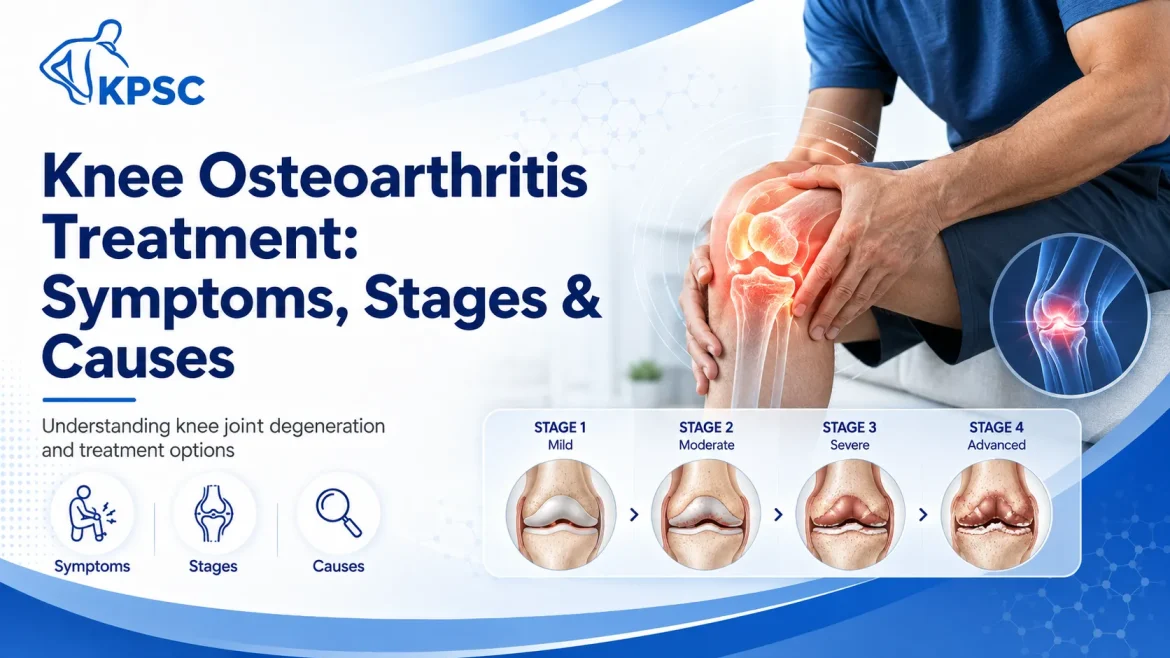
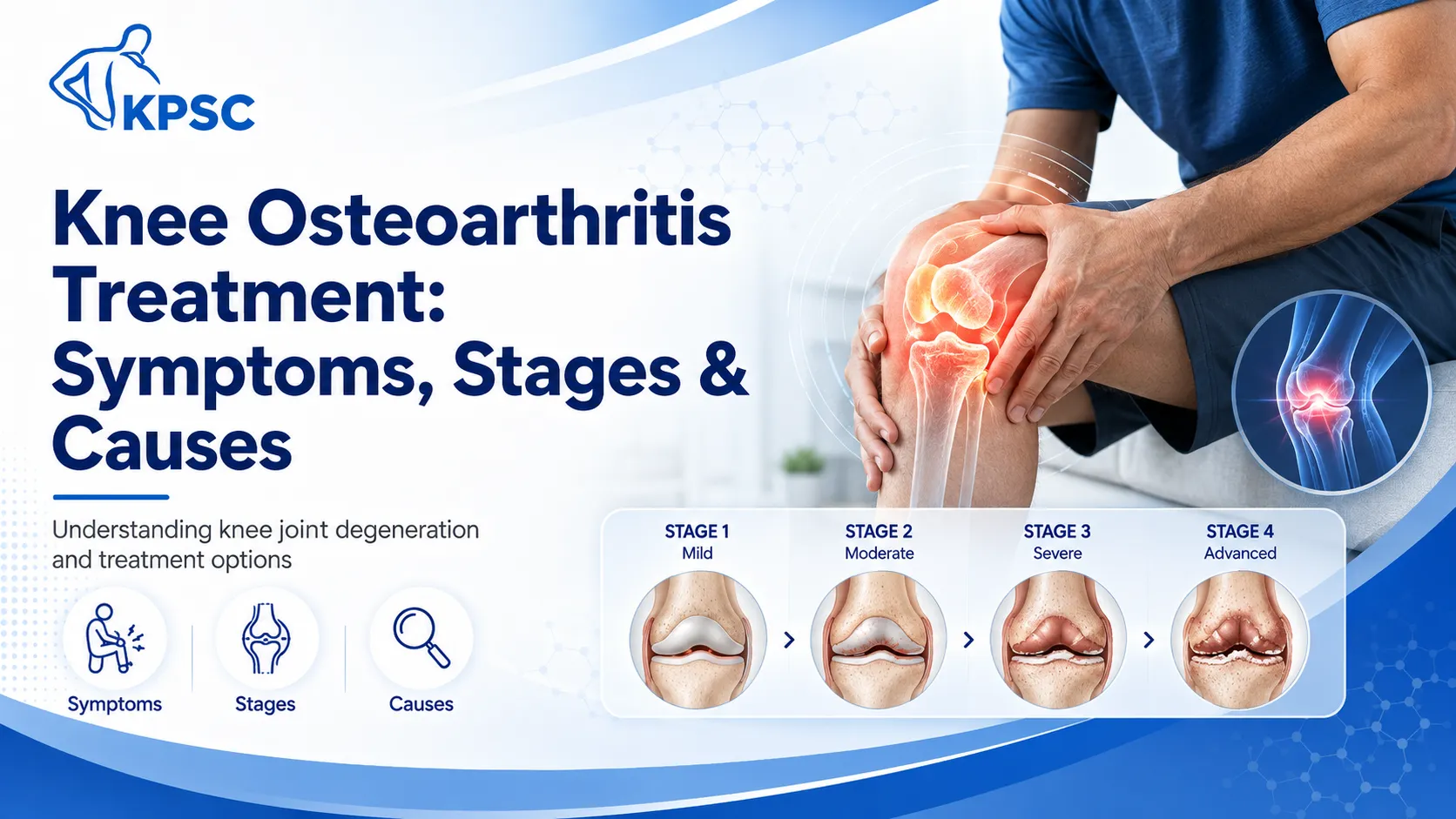
The Four Vital Knee Osteoarthritis Stages
This progressive condition moves through four distinct phases. Evaluating these specific knee osteoarthritis stages helps doctors choose the right therapy level for you.
Stage 1 & 2: Minor and Mild Progression
In the beginning, minor bone spurs develop, but the space between bones remains largely normal. As it moves to the mild phase, the gap begins to narrow slightly, and you feel stiffness after sitting for a long time.
Stage 3 & 4: Moderate and Severe Progression
During the moderate phase, the cartilage shows obvious erosion, narrowing the joint gap significantly. In the severe phase, the cartilage disappears almost completely, causing bone-on-bone friction and intense pain.
Effective Management and Clinical Evaluation
To stop joint wear, you need an early clinical diagnosis. Getting an accurate assessment helps map out your exact stage of degeneration. Modern diagnostic tools like X-rays and MRI scans give doctors a clear view of your joint health.
Combining medical guidance with regular low-impact exercises like swimming can keep your legs moving smoothly. Early lifestyle modifications often delay or completely prevent the need for surgical operations later in life.
Professional Knee Pain Treatment in Kolkata
You do not have to let joint degeneration control your daily life or isolate you at home. Getting a timely assessment ensures you can walk, bend, and live completely pain-free. For comprehensive clinical care, explore options for Knee pain treatment in Kolkata at Kolkata Pain Relief to find an effective path back to easy, natural movement.
Schedule Your Clinical Assessment Today
- Restore Mobility: Get a personalized care plan to protect your natural bone structure.
- Expert Guidance: Work directly with seasoned professionals specializing in joint care.
- Safe Recovery: Explore advanced non-surgical therapies designed for long-term health.
Conclusion
Managing joint health is a continuous journey that requires the right balance of awareness and timely action. By understanding the underlying knee osteoarthritis causes and keeping a close eye on early knee osteoarthritis symptoms, you can easily protect your mobility before structural damage advances. Remember that passing through the progressive knee osteoarthritis stages is not an overnight process; you have ample time to intervene, modify your lifestyle, and protect your joints. Seeking a scientifically backed knee osteoarthritis treatment early on remains the single best strategy to stay active, independent, and completely pain-free for years to come.
Frequently Asked Questions
What is the most effective knee osteoarthritis treatment for early stages?
Early management focuses heavily on lifestyle modifications. Regular low-impact physical therapy, targeted muscle strengthening, and weight management work best to relieve pressure on the joint.
Can knee osteoarthritis symptoms appear suddenly after an injury?
While the underlying cartilage degeneration happens gradually over several years, minor trauma or sudden strain can cause latent symptoms to flare up abruptly.
What are the main knee osteoarthritis causes in younger adults?
In younger individuals, joint wear is usually triggered by old sports injuries, repetitive mechanical stress from work, severe joint misalignment, or underlying genetic factors.
How quickly do patients move through the knee osteoarthritis stages?
The rate of progression varies for everyone. Weight management, muscle strength, and early medical intervention play a massive role in slowing down joint narrowing.
Is walking good for people seeking knee osteoarthritis treatment?
Yes, gentle walking on flat surfaces strengthens the surrounding muscles. However, you must avoid overexertion and rest immediately if your joint begins to ache.
When should I see a doctor for knee osteoarthritis symptoms?
You should seek professional medical advice if your joint pain lasts for more than a few weeks, causes morning stiffness, or disrupts your sleep.