
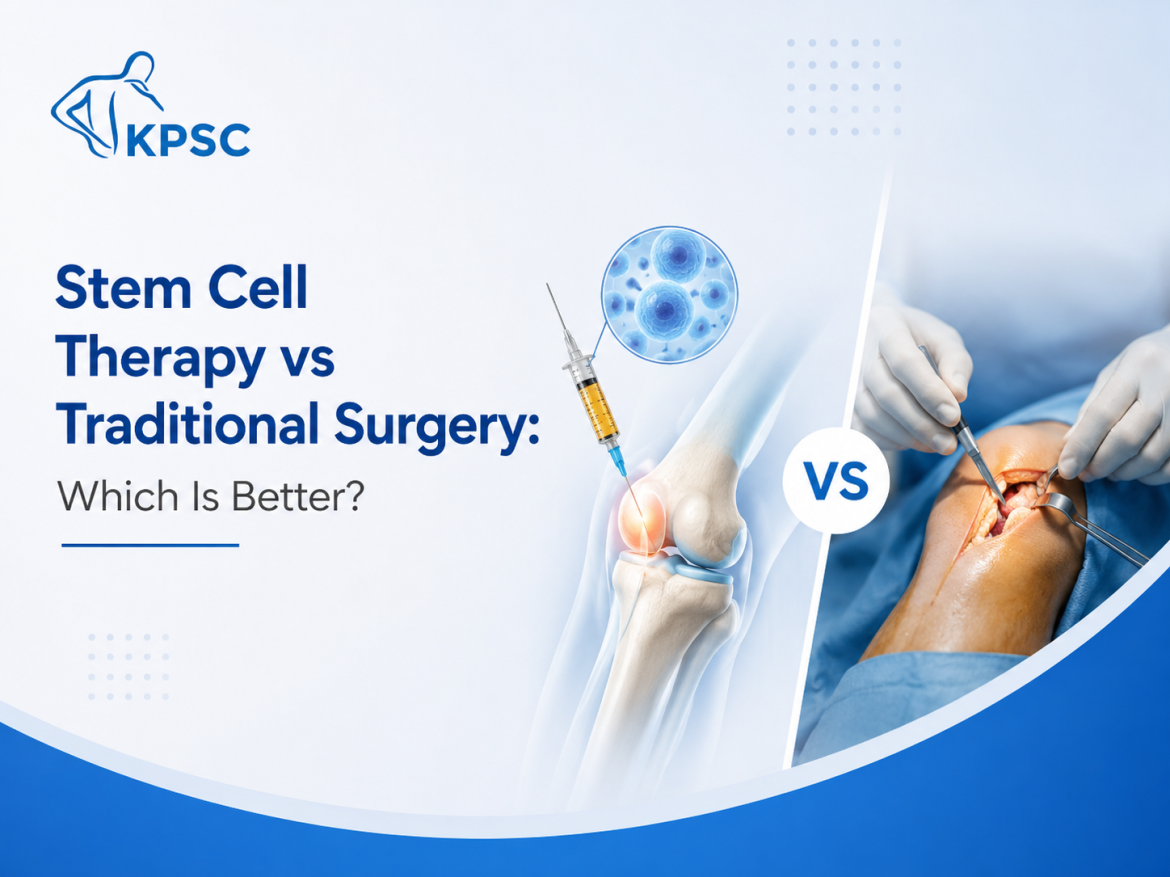
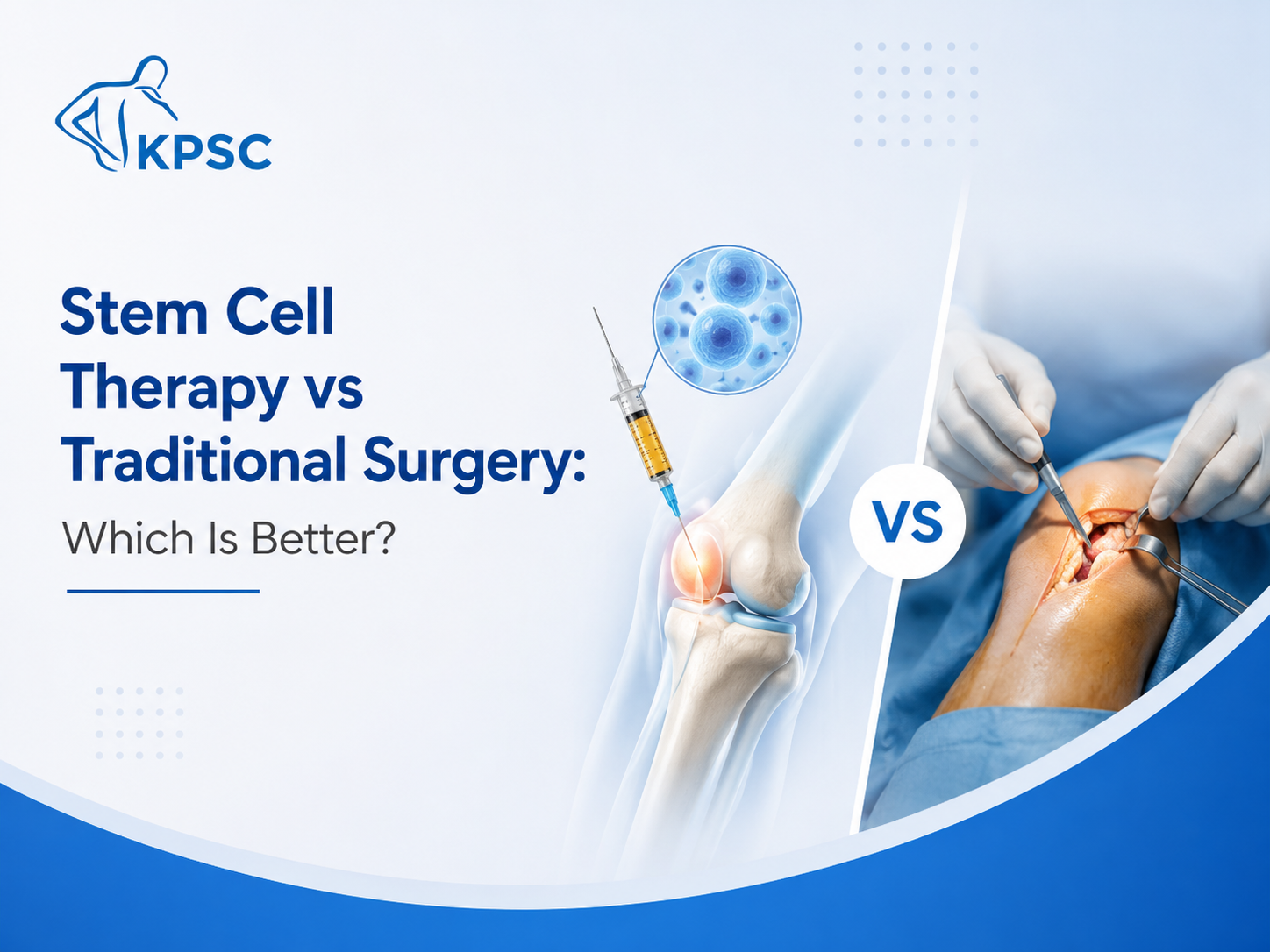
Joint pain has a way of making your world smaller. Climbing the stairs of an old Kolkata flat, sitting cross-legged at a family lunch, or finishing a morning walk near the lake starts feeling like hard labour. At that stage, most patients hear only two suggestions from well-wishers: operation, or injection. Stem Cell Therapy sits on the non-surgical side of that choice, while traditional surgery repairs or replaces the damaged joint. This guide compares both in plain language, with accurate and up to date information, so you can plan a sensible Non-Surgical Pain Treatment path.
Stem Cell Therapy Explained in Simple Terms
Stem Cell Therapy is a regenerative, needle-based procedure. Your doctor draws cells from your own body, usually from bone marrow or fat tissue, concentrates them, and places them inside the damaged joint.
These mesenchymal cells support tissue repair and help calm inflammation. Since the cells are your own, the risk of rejection during Stem Cell Therapy stays very low.
How Stem Cell Therapy Works Step by Step
- Assessment: Your specialist studies X-rays, MRI reports and joint movement before advising Stem Cell Therapy.
- Collection: A small sample of bone marrow or fat tissue is drawn, usually from the hip or abdomen.
- Processing: The sample is concentrated under controlled, sterile conditions.
- Injection: The concentrate is placed inside the joint under ultrasound or C-arm guidance for accuracy.
- Recovery: Most patients go home the same day and resume light activity within a few days.
Stem Cell Therapy vs Surgery: The Practical Differences
The real question in Stem Cell Therapy vs Surgery is not about crowning a winner. It is about the stage of your joint disease and what your body can handle comfortably.
- Approach: Stem Cell Therapy is a day-care injection procedure, while surgery involves cuts, anaesthesia and implants.
- Aim: Stem Cell Therapy supports the joint you already have, while surgery reconstructs or replaces it.
- Downtime: Recovery after Stem Cell Therapy is short, while surgery needs weeks of structured rehabilitation.
- Certainty: Surgery gives more predictable results in advanced disease, while Stem Cell Therapy results vary between patients.
- Flexibility: Stem Cell Therapy keeps surgery open as a future option, whereas a replaced joint cannot be undone.
Recovery After Stem Cell Therapy and Return to Daily Life
After Stem Cell Therapy, most patients walk out the same day with mild soreness. Guided physiotherapy usually begins within a week or two.
After joint replacement, hospital admission, wound care and a longer rehabilitation plan are part of the journey. Both routes need patience, because healing tissue follows its own clock.
Risks and Safety Profile of Stem Cell Therapy
- Stem Cell Therapy commonly causes mild swelling or soreness that settles within a few days
- Surgical risks include infection, blood clots, stiffness and implant related complications
- Active infection or certain blood disorders can make Stem Cell Therapy unsuitable
- Diabetes, heart disease and excess body weight affect the safety of both options
Evidence Behind Stem Cell Treatment Today
Strong marketing is not the same as strong evidence, so let us stay honest here. Reviews of randomised trials report meaningful improvement in pain and joint function after Stem Cell Treatment for mild to moderate knee osteoarthritis.
The certainty of that evidence still varies across studies, and a few analyses show a smaller benefit over placebo. Research on Stem Cell Treatment is active and growing, which is a good sign for patients waiting on better answers.
Regulation matters equally. In India, a bone marrow derived mesenchymal cell product for knee osteoarthritis has received approval from the CDSCO. Other forms of Stem Cell Treatment outside approved indications are treated as investigational by the ICMR and must follow proper regulatory pathways.
In short, Stem Cell Therapy is promising and reasonably safe for the right patient. It is not a miracle, and it cannot rebuild a fully worn out joint.
Non-Surgical Pain Treatment Options That Support Recovery
Stem Cell Therapy rarely works alone. A sensible Non-Surgical Pain Treatment plan usually combines a few tools together.
- PRP and other image guided regenerative injections
- Radiofrequency ablation and nerve blocks for stubborn pain
- Ozone therapy for selected joint and spine conditions, used alongside Stem Cell Therapy where suitable
- Physiotherapy, muscle strengthening and gait correction
- Weight control, diet support and simple daily habit changes
This layered Non-Surgical Pain Treatment approach can delay surgery for years, especially in early arthritis. It also improves the outcome if surgery becomes necessary later.
Choosing Between Stem Cell Therapy and Surgery
- Early to moderate arthritis with an active lifestyle: Stem Cell Therapy is worth discussing
- Severe deformity or complete cartilage loss: surgery is usually the practical choice
- Medically unfit for anaesthesia: Stem Cell Therapy may offer a safer middle path
- Medicines and physiotherapy have failed but joint space is preserved: Stem Cell Therapy fits well
Only a proper clinical examination, along with recent scans, can settle the Stem Cell Therapy vs Surgery question for you. Age alone is never the deciding factor, and a good Non-Surgical Pain Treatment trial often comes first.
Stem Cell Therapy at Kolkata Pain Relief
At Kolkata Pain Relief, Stem Cell Therapy in Kolkata is guided by Dr. Krishna Poddar, a fellowship trained pain consultant with training in the USA, Europe and Australia. Every plan starts with a detailed assessment and imaging review.
Patients choose Stem Cell Therapy in Kolkata here because the advice stays straight. If surgery is genuinely the better answer for your knee or spine, you will be told exactly that.
Take the First Step Towards Pain Free Movement
You should not have to plan your day around a painful knee. Book a consultation with our pain specialists and receive a clear, personalised opinion on Stem Cell Therapy, surgery, or a combined treatment plan.
Call the clinic or use the appointment form on our website to discuss Stem Cell Therapy in Kolkata, and take one confident step towards easier movement today.
Conclusion
There is no single winner in this debate. Stem Cell Therapy is a strong choice for early and moderate joint damage, while surgery remains the dependable answer for advanced disease.
The right decision depends on your scans, your age, your general health and your daily goals. Discuss both routes with a qualified pain specialist before you decide anything.
Frequently Asked Questions
Is stem cell therapy better than surgery for knee pain?
Stem Cell Therapy suits early to moderate arthritis and can delay surgery. For complete cartilage loss, joint replacement usually gives more predictable and longer lasting relief.
Is stem cell therapy painful?
Discomfort is mild. Local anaesthesia is used during cell collection and injection, and most patients report only short lived soreness or swelling for a few days.
How long do stem cell therapy results last?
Results vary widely. Many patients report relief lasting one to two years or more, depending on arthritis stage, body weight, activity level and physiotherapy follow up.
Is stem cell therapy approved in India?
One bone marrow derived cell product for knee osteoarthritis carries CDSCO approval. Other forms of Stem Cell Treatment remain investigational and must follow ICMR guidance and regulatory approval routes.
Who should avoid stem cell therapy?
Patients with active infection, certain blood disorders, untreated cancer or complete bone-on-bone arthritis are usually guided towards other options after a detailed medical assessment.
How soon can I walk after stem cell therapy?
Most patients walk on the same day. Comfortable walking usually returns within a few days, with guided physiotherapy starting one to two weeks later.