
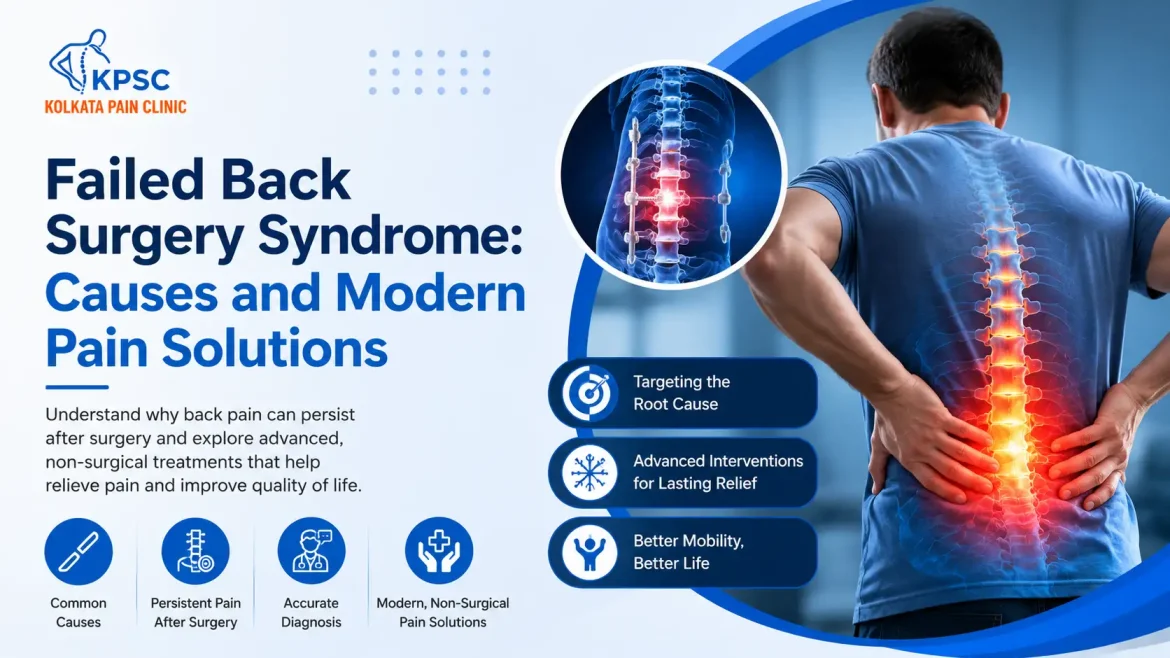
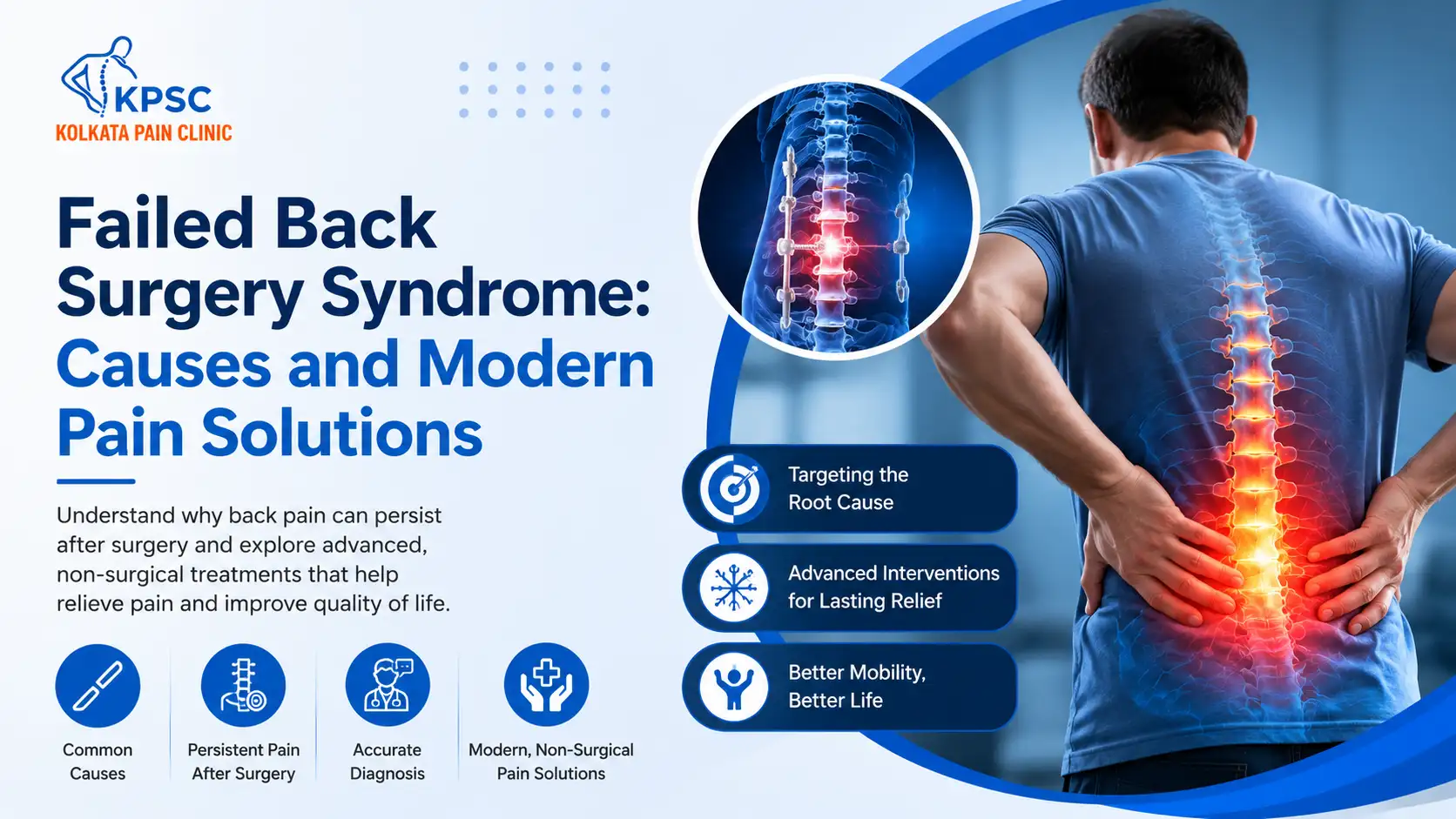
Back surgery is meant to bring relief. But for a significant number of patients, the pain persists or even worsens after the procedure. This condition is known as Failed Back Surgery Syndrome (FBSS), and it is more common than many people realise. If you have had back surgery and are still experiencing pain, you are not alone and proper
Failed Back Surgery Syndrome treatment is available. Understanding this condition is the first step towards finding the right path forward.
Failed Back Surgery Syndrome: A Closer Look
Failed Back Surgery Syndrome refers to persistent or recurring back and leg pain that continues after one or more spinal surgeries. The term does not mean the surgery was performed incorrectly. It simply means the desired outcome, long-term pain relief, was not achieved.
FBSS is also referred to as Post-Laminectomy Syndrome. It can follow procedures such as laminectomy, discectomy, spinal fusion, or other spinal decompression surgeries.
The pain in FBSS is typically a combination of nociceptive and neuropathic pain, making it complex to manage without specialist care.
Common Failed Back Surgery Syndrome Causes
Understanding Failed Back Surgery Syndrome causes helps both patients and doctors approach treatment more effectively. There is rarely a single cause, it is usually a combination of factors.
Surgical and Structural Factors
- Incomplete removal of a herniated disc, leaving residual pressure on nerves
- Improper or failed spinal fusion, where bones do not heal together correctly
- Scar tissue formation (epidural fibrosis) around nerve roots after surgery
- Adjacent segment disease, degeneration of spinal segments above or below the fusion site
- Nerve damage occurring during the surgical procedure itself
Pre- and Post-Surgical Factors
- Incorrect pre-surgical diagnosis, surgery targeting the wrong source of pain
- Poor patient selection, surgery performed when conservative treatment would have sufficed
- Degenerative changes in the spine continuing after surgery
- Inadequate post-operative rehabilitation and non-compliance with physiotherapy
- Psychological factors such as chronic stress, anxiety, or depression affecting recovery
These Failed Back Surgery Syndrome causes highlight why a thorough evaluation before and after surgery is so critical.
Identifying Failed Back Surgery Syndrome Symptoms
Recognising Failed Back Surgery Syndrome symptoms early enables timely medical intervention. Symptoms can vary widely from patient to patient, but the most frequently reported ones include:
Persistent or worsening lower back pain after surgery
- Sharp, shooting, or burning pain radiating down one or both legs (sciatica-type pain)
- Numbness, tingling, or weakness in the legs or feet
- Stiffness and reduced flexibility in the lower back
- Difficulty standing or walking for extended periods
- Muscle spasms around the back and hips
- Disturbed sleep due to chronic pain
If you notice any of these Failed Back Surgery Syndrome symptoms, especially if they appear weeks or months after surgery, consult a pain specialist without delay. Untreated FBSS can progress to chronic disability, depression, and heavy reliance on pain medications.
Modern Failed Back Surgery Syndrome Treatment Options
The good news is that effective Failed Back Surgery Syndrome treatment is available. The right approach depends on the specific cause and severity of the condition. A multidisciplinary team typically delivers the best results.
Medications for Pain Management
Pharmacological management is usually the starting point in Failed Back Surgery Syndrome treatment. Commonly prescribed options include:
- NSAIDs (non-steroidal anti-inflammatory drugs) to reduce inflammation and pain
- Neuropathic pain medications such as gabapentin or pregabalin
- Muscle relaxants for spasms and tension around the spine
- Antidepressants, which also help modulate chronic nerve pain signals
Short-term opioids in carefully selected cases under specialist supervision.
Epidural Steroid Injections
Epidural steroid injections deliver anti-inflammatory medication directly into the epidural space around the spinal nerve roots. They are particularly effective when epidural fibrosis or nerve root irritation is contributing to pain.
These injections are a well-established, minimally invasive component of Failed Back Surgery Syndrome treatment and can provide meaningful, lasting relief in many patients seeking Failed Back Surgery Syndrome Treatment in Kolkata.
Spinal Cord Stimulation (SCS)
Spinal cord stimulation is one of the most evidence-backed interventional options for Failed Back Surgery Syndrome. A small device is implanted near the spinal cord that delivers gentle electrical impulses, interrupting pain signals before they reach the brain.
Research consistently shows SCS improves pain levels and functional quality of life in FBSS patients, especially those who have not responded to conservative treatment.
Adhesiolysis for Epidural Fibrosis
In patients where scar tissue (epidural fibrosis) is compressing nerve roots, a procedure called adhesiolysis may be performed. It breaks down the scar tissue to relieve nerve compression and restore better function.
Physical Therapy and Rehabilitation
Exercise-based rehabilitation is a cornerstone of long-term Failed Back Surgery Syndrome treatment. Targeted physiotherapy helps:
- Strengthen muscles supporting the spine
- Improve posture and spinal alignment
- Increase flexibility and range of motion
- Reduce pain sensitisation over time
A structured, supervised rehabilitation programme gives the best outcomes when combined with other treatment approaches.
Expert Care for Failed Back Surgery Syndrome in Kolkata
At Kolkata Pain Relief, we understand how frustrating and exhausting it is to still live with pain after surgery. Our team of experienced pain management specialists offers a structured, evidence-based approach to Failed Back Surgery Syndrome care, from accurate diagnosis to advanced interventional procedures.
We combine the latest techniques with personalised treatment plans, ensuring every patient receives care tailored to their specific condition and recovery goals.
Stop Living With Post-Surgery Pain — Explore Your Failed Back Surgery Syndrome Treatment Options
Back pain after surgery is not something you simply have to accept. With the right specialist and the right plan, significant relief is achievable.
Kolkata Pain Relief offers advanced, patient-first care for Failed Back Surgery Syndrome. From epidural injections and spinal cord stimulation to personalised rehabilitation, we are here to help you reclaim your life.
Call us or book your consultation today to book your consultation.
Conclusion
Failed Back Surgery Syndrome is a real, recognised medical condition that deserves proper attention and specialised care. Understanding its Failed Back Surgery Syndrome causes and Failed Back Surgery Syndrome symptoms early can make a meaningful difference to long-term outcomes.
Today, Failed Back Surgery Syndrome treatment has advanced significantly. From spinal cord stimulation and epidural injections to targeted rehabilitation, patients have access to effective, modern solutions that go well beyond simply managing pain.
If you or a loved one is suffering after a spinal procedure, the right help is closer than you think. Reach out to a qualified pain specialist and take that first step towards recovery.
Frequently Asked Questions
1. What is Failed Back Surgery Syndrome?
Failed Back Surgery Syndrome is persistent or worsening back and leg pain following spinal surgery. It occurs when the desired pain relief is not achieved despite a technically performed procedure.
2. What are the main Failed Back Surgery Syndrome causes?
Failed Back Surgery Syndrome causes include incorrect diagnosis, scar tissue formation, failed spinal fusion, nerve damage, adjacent segment disease, and inadequate post-surgical rehabilitation.
3. What are the most common Failed Back Surgery Syndrome symptoms?
Failed Back Surgery Syndrome symptoms include persistent lower back pain, radiating leg pain, numbness, tingling, weakness, stiffness, and disturbed sleep, continuing or worsening after surgery.
4. Is Failed Back Surgery Syndrome treatment effective?
Yes. Modern Failed Back Surgery Syndrome treatment including spinal cord stimulation, epidural injections, and structured rehabilitation has shown strong evidence for significant pain reduction and improved quality of life.
5. Can Failed Back Surgery Syndrome be prevented?
Failed Back Surgery Syndrome risk can be reduced through accurate pre-surgical diagnosis, appropriate patient selection, skilled surgical technique, and thorough post-operative rehabilitation with physiotherapy compliance.
6. Does spinal cord stimulation help Failed Back Surgery Syndrome?
Yes. Spinal cord stimulation is one of the most evidence-backed interventional options for Failed Back Surgery Syndrome, demonstrating significant pain relief and functional improvement in many patients.