
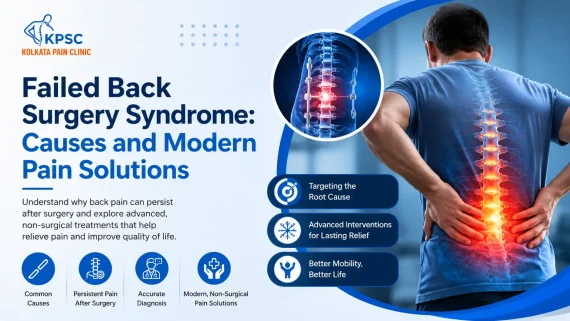
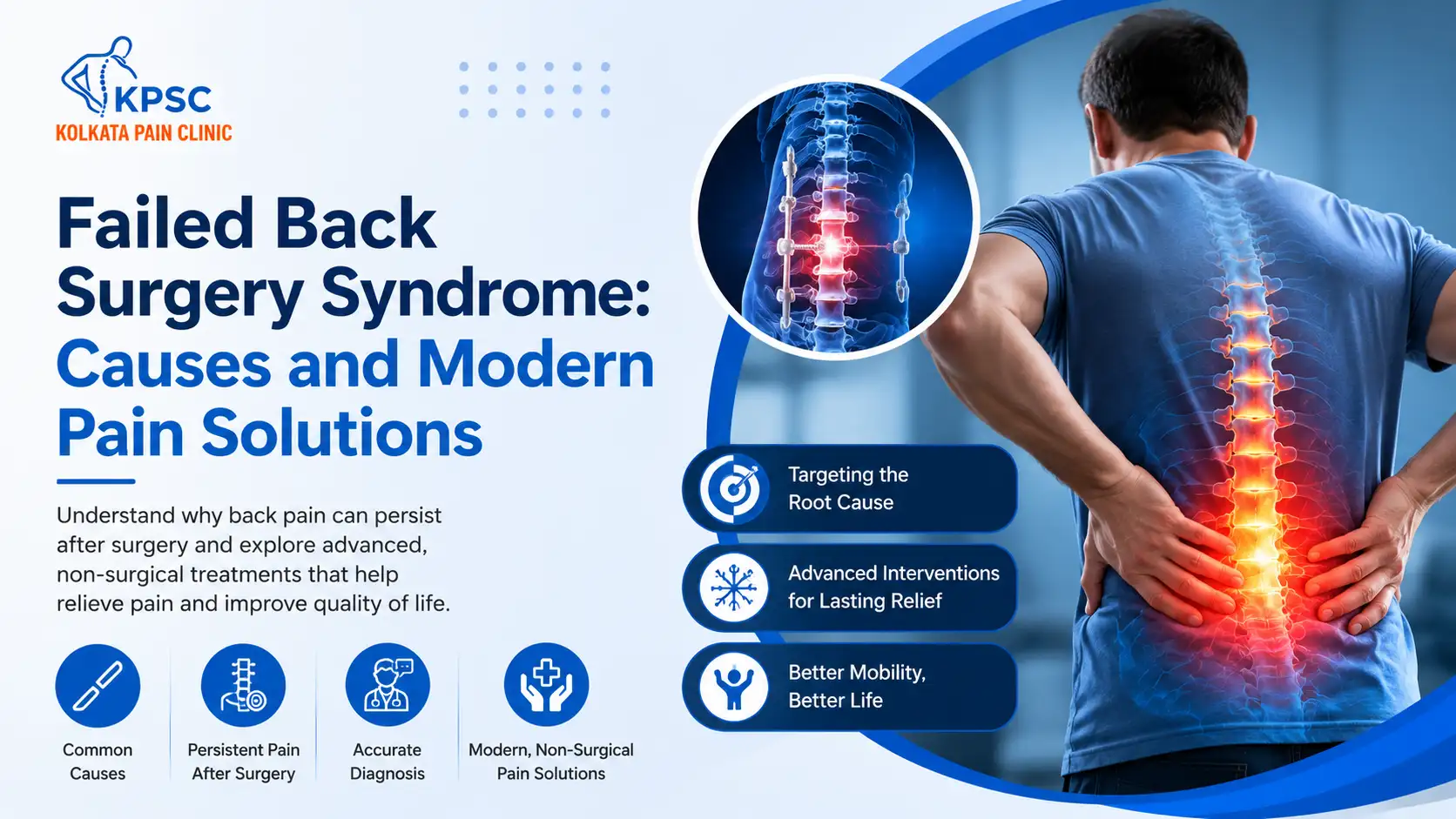
Back surgery is meant to bring relief. But for a significant number of patients, the pain persists or even worsens after the procedure. This condition is known as Failed Back Surgery Syndrome (FBSS), and it is more common than many people realise. If you have had back surgery and are still experiencing pain, you are not alone and proper Failed Back Surgery Syndrome treatment is available. Understanding this condition is the first step towards finding the right path forward.
Failed Back Surgery Syndrome: A Closer Look
Failed Back Surgery Syndrome refers to persistent or recurring back and leg pain that continues after one or more spinal surgeries. The term does not mean the surgery was performed incorrectly. It simply means the desired outcome, long-term pain relief, was not achieved. FBSS is also referred to as Post-Laminectomy Syndrome. It can follow procedures such as laminectomy, discectomy, spinal fusion, or other spinal decompression surgeries. The pain in FBSS is typically a combination of nociceptive and neuropathic pain, making it complex to manage without specialist care.
Common Failed Back Surgery Syndrome Causes
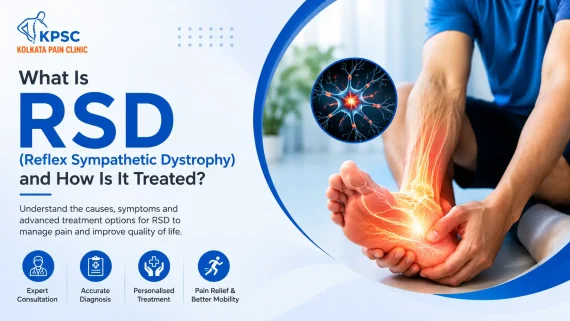
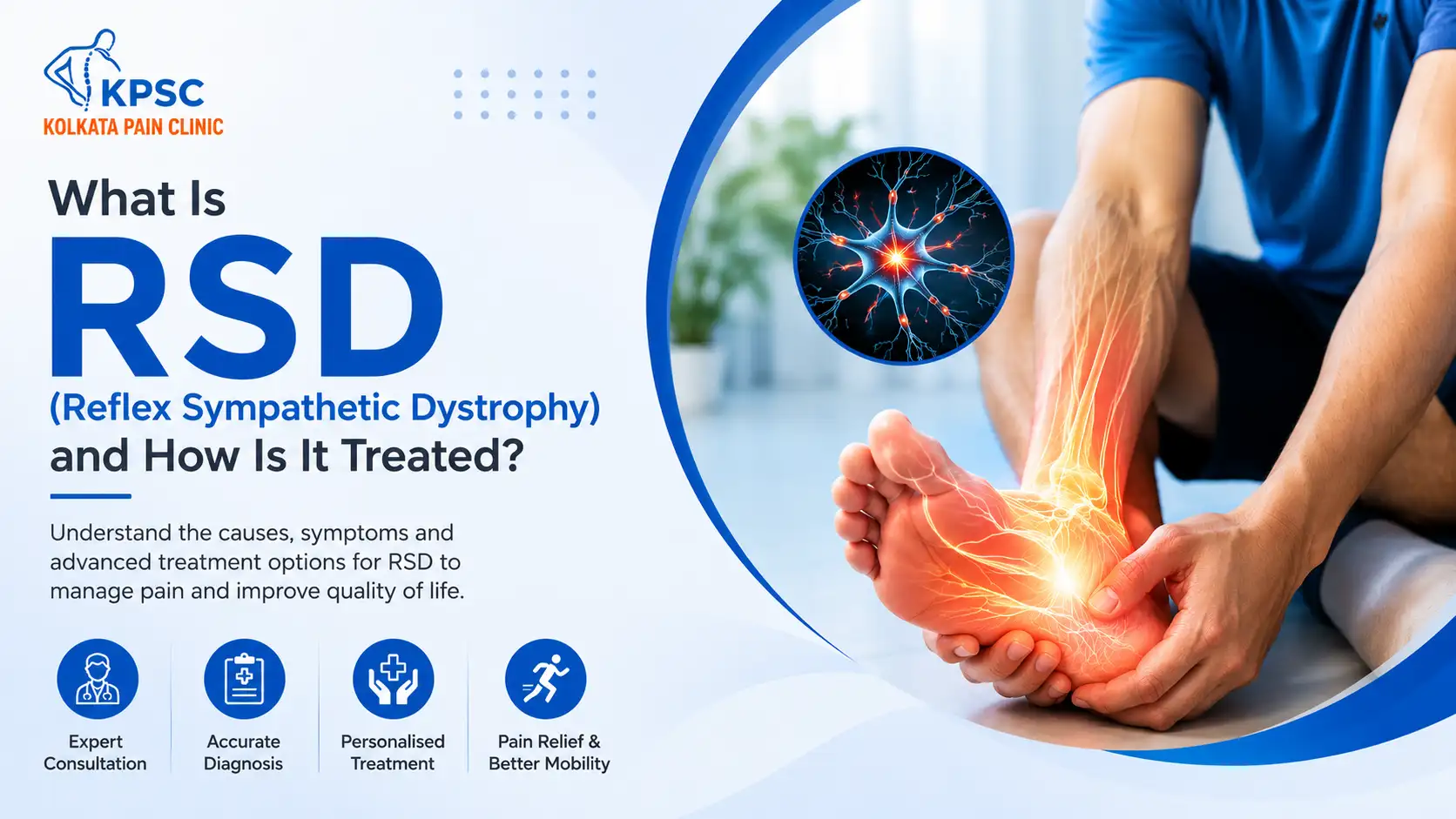
Living with constant, burning pain in your arm or leg is not something anyone should accept as normal. If this sounds familiar, you may be dealing with Reflex Sympathetic Dystrophy, or RSD. This chronic pain condition disrupts daily life and requires proper diagnosis and targeted RSD treatment to manage effectively. Understanding this condition is the first step towards reclaiming your quality of life. In this blog, we will walk you through what RSD actually is, how it presents itself, and what modern treatment options are available, including those offered by specialists right here in Kolkata.
RSD Treatment Starts With Knowing What It Is
Reflex Sympathetic Dystrophy (RSD) is a chronic pain condition, medically known as Complex Regional Pain Syndrome Type 1 (CRPS Type 1). It typically affects one limb, most commonly an arm, leg, hand or foot, following an injury, surgery, or trauma. The key characteristic of RSD is that the pain is disproportionately severe compared to the original injury. The condition arises from an abnormal response of the sympathetic nervous system, which governs blood flow and temperature regulation in the body. Common triggers of RSD include: